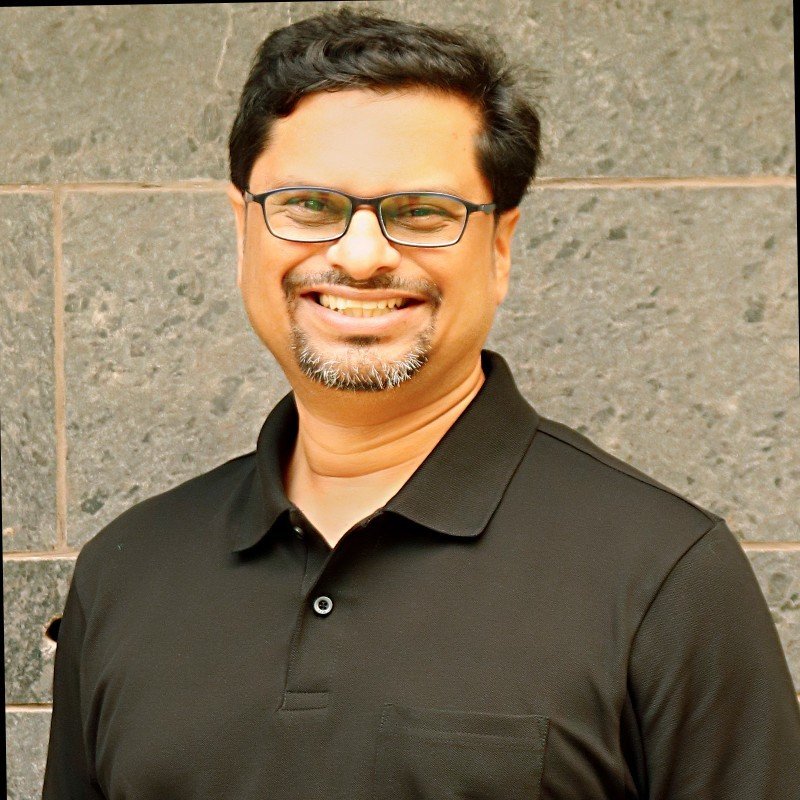
About Jitendra Rathod
My path to marketing leadership did not begin in marketing
I began my career in science and higher education. Since moving into professional writing and strategic communication more than 16 years ago, I have worked across business content, entrepreneurship, startup assessment, product positioning and marketing leadership.
That varied background now shapes how I work as a Fractional CMO. I am able to understand complex businesses, work closely with founders and connect marketing decisions with the realities of the business behind them.
FOUNDATIONS
From science and teaching to communication
I began my professional life in science and higher education. After completing my Master’s degree in Microbiology, I spent eight years as an Assistant Professor teaching subjects such as Microbiology, Biotechnology, Immunology and Agricultural Microbiology at a college affiliated with the University of Pune.
Teaching trained me to do something that has remained central to my work ever since: understand a complex subject well enough to explain it clearly. A classroom quickly shows you when an idea has not been understood, when an explanation is too technical, or when important connections have been left unstated. That discipline later became invaluable when I began working with businesses, founders and technical organisations.
My transition away from academia was not part of a carefully planned move into marketing. I began writing professionally and gradually found myself working with increasingly complex business, scientific and strategic subjects. Over time, the work moved beyond presenting information. I began helping clients decide what mattered, what needed to be said, and how their expertise could be made relevant to the people they wanted to reach.
STRATEGIC COMMUNICATION
Sixteen years inside business writing and communication
When I began writing professionally, I entered through content. Over the years, however, the work expanded far beyond producing articles, websites or marketing material. I worked across industries, business models and technical subjects, often with founders and organisations that knew their field well but struggled to explain why their work mattered.
Much of my work involved complex or specialised subjects, including life sciences, healthcare, venture capital, technology, finance and entrepreneurship. This required more than good writing. I had to understand the business, identify the real audience, decide what deserved emphasis and find a language that could carry technical credibility without becoming difficult to follow.
That experience gradually changed the questions I asked. Instead of beginning with “What should we write?”, I began asking what the business wanted to be known for, which customer it needed to reach and whether the message matched the direction of the business. This was the point at which communication began moving towards positioning and marketing strategy.
ENTREPRENEURSHIP & OPERATIONS
Learning what business decisions look like from the inside
My perspective was also shaped by running a business rather than advising one from the outside. For four years, I operated an Amore Gelato master franchise, managing an outlet as well as product supply to Sula Vineyards. The work covered production, quality and hygiene, staffing, sales, customer experience, local marketing and day-to-day problem-solving.
That experience made business constraints very real. Marketing decisions could not be separated from margins, operational capacity, team capability or customer expectations. A promising idea still had to work on the ground, and every new initiative competed for limited time, attention and money.
I later served as Co-Founder and COO at 500x Tech Labs, where I worked across operations, finance, product thinking and go-to-market strategy for digital ventures. The role gave me direct exposure to the practical work involved in turning an early concept into a more structured business, while balancing product ambition with commercial and operational realities.
I later worked more closely with startups through A1 Advisory (a boutique venture capital advisory) and venture-related assignments, assessing businesses, their funding readiness and the clarity of their commercial story. This gave me a wider view of the questions founders face as they move from an idea to a more structured and investable business.
MARKETING LEADERSHIP
Moving from communication into business and marketing direction
As my work with founders and businesses deepened, the assignments began to change. I was often brought in for a website, article or brand document, but the real questions sat further upstream. The audience was unclear, the offering had evolved, different teams were telling different stories, or the marketing activity had no shared direction.
I began working more closely on positioning, customer priorities, business narratives, product stories and content direction. The focus shifted from creating individual pieces of communication to helping businesses decide what they should say, whom they needed to reach and where their marketing effort should go first.
This progression became more formal at Vāyas Lifegenix, where I was brought in to lead marketing and now serve as Director and CMO. My work spans product positioning, audience definition, science communication, website and content direction, and the broader task of building a more coherent market presence around the brand.
FRACTIONAL CMO
The role I bring into businesses today
Today, I work as a Fractional CMO with a particular strength in business positioning, strategic narrative and content direction. I usually work with founder-led businesses that have reached a point where informal marketing decisions are no longer enough, but a full-time senior marketing hire may not yet be practical.
My role is to help the leadership team make the decisions that should guide marketing. This may involve clarifying what the business should be known for, deciding which customers deserve priority, sharpening the product or service story, and translating business goals into a focused marketing direction.
I can then help align the website, sales communication, content, campaigns and external partners around that direction. The aim is to give the business senior marketing judgement and continuity, while allowing internal teams, freelancers or agencies to execute with greater clarity.
WHAT I BRING
A wider view of the business behind the marketing
My background allows me to enter a business from several different angles. The scientist in me looks for evidence, connections and the real cause of a problem. The teacher in me looks for clarity. The writer listens for gaps in the story. The operator considers what can realistically be implemented.
Because I have worked with technical subjects, entrepreneurs, startups and operating businesses, I am comfortable asking questions that extend beyond communication. I can examine the offering, the customer, the commercial priorities and the internal constraints before recommending what marketing should do.
This is especially useful in founder-led businesses, where much of the business knowledge still sits in the founder’s head. My role is often to draw that thinking out, organise it, challenge it where necessary, and convert it into a direction that the wider team can understand and use.
Let us discuss what the next stage of your business needs.
If your marketing has become fragmented, overly dependent on you, or disconnected from where the business is heading, we can begin with a conversation about the decisions that need greater clarity.